
What It Measures
What Hormone Testing for Women Actually Measures
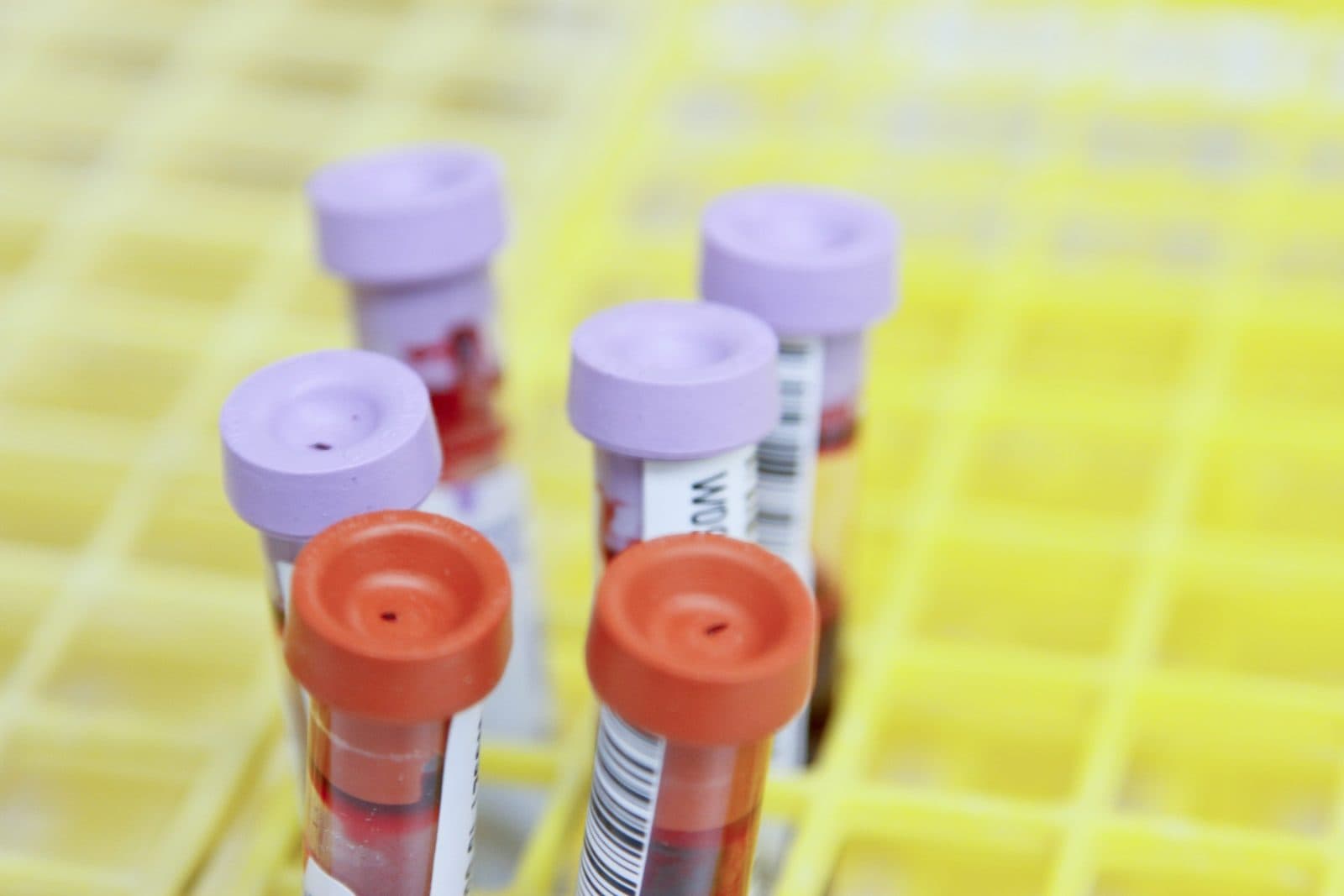
Hormone testing for women is a blood panel, and the markers on it are unremarkable. What makes a female hormone test hard to read is not the chemistry. It is that most of these hormones move on a monthly orbit, and the report prints one point from it with no note about where in the month it was taken.
A female hormone panel measures some version of this list:
- Estradiol (E2). The dominant estrogen of the reproductive years. A sensitive LC-MS/MS estradiol test resolves the low values that matter after menopause, where older immunoassays blur them.
- FSH and LH. An FSH and LH blood test reads the pituitary signal being sent to the ovary, not the hormone the ovary produced.
- Progesterone. Made after ovulation and near-absent before it, which makes it a timing test more than a level test.
- Total and free testosterone. The free fraction tracks sex hormone-binding globulin, not the ovary alone.
- TSH and a thyroid panel. Thyroid disease impersonates nearly every symptom that sends a woman for hormone testing.
- Prolactin. A high prolactin suppresses the cycle, and its causes - medication, a pituitary adenoma - are not fixed by a hormone prescription.
- AMH. A marker of ovarian reserve with a narrower legitimate use than its marketing suggests.
Protocol Health's Female Hormone & Performance Blood Panel runs estradiol by LC-MS/MS, FSH and LH, total and free testosterone by LC-MS/MS, a thyroid panel with TSH, prolactin, vitamin D and B12, a comprehensive metabolic panel, a CBC with differential, a lipid panel and HbA1c. The metabolic half is not padding: fatigue and broken sleep are as often a thyroid or glucose problem as a sex-hormone one, and a panel blind to those hands the blame to estrogen by default.
Take the hormone quiz and book a consultCycle Timing
When in the Menstrual Cycle to Draw Each Hormone
Cycle timing is the most common reason a female hormone blood test gets misread, and it is the item the large lab-panel pages leave out. Hormone levels during the menstrual cycle are supposed to move, and each marker has a window in which its value means something specific.
| Marker | When it is drawn | What the timing protects |
|---|---|---|
| Estradiol, FSH, LH | Cycle day 2-5, early follicular | A baseline taken before a growing follicle makes its own estrogen |
| Progesterone | About 7 days after ovulation, mid-luteal | Evidence that ovulation happened at all |
| Total and free testosterone, SHBG | Morning, any cycle day | The daily peak, which matters more here than the monthly one |
| TSH, free T4, prolactin | Morning, any cycle day | Prolactin rises with sleep, stress and a recent breast examination |
| AMH | Any day | Ovarian reserve shifts across years, not weeks |
If your cycle is no longer predictable, those windows dissolve and the draw is scheduled against symptoms instead. If you never had a predictable cycle, that is a finding in itself, and it changes the workup before the calendar.
One timed draw is also narrower than it looks. In midlife women followed through the menopause transition by the Study of Women's Health Across the Nation's Daily Hormone Study, a single luteal serum progesterone drawn between cycle days 16 and 24 correlated only weakly with the same woman's integrated luteal urinary pregnanediol glucuronide - Pearson's r of 0.26, explaining about 7 percent of the variability, across 268 samples from 170 women (Santoro et al., Menopause, 2020). The draw says progesterone was present that morning. It does not add up the phase.
Perimenopause
Why One FSH Result Cannot Stage Perimenopause
One FSH result cannot stage perimenopause: a single FSH does not diagnose it, and a normal one does not rule it out. Across the menopausal transition FSH swings cycle to cycle, so blood drawn in a month the ovary still responded reads reassuringly normal in a woman plainly transitioning. That is why the best time to check hormone levels for perimenopause has no clean answer, and why repeating the draw tells you more than refining the first one.
The consensus staging system concedes the point by what it is built on. The Stages of Reproductive Aging Workshop +10 set its criteria on menstrual bleeding patterns, and reviewed AMH, inhibin B, FSH and antral follicle count as supporting markers rather than as the definition (Harlow et al., Journal of Clinical Endocrinology & Metabolism, 2012).
Practically, your bleeding history is the test. The panel finds the conditions that imitate perimenopause - thyroid disease, high prolactin, anemia - and sets a baseline before anyone proposes treatment. Perimenopause and menopause differ in ways a lab cannot see from one tube.
Birth Control
Hormonal Contraception Changes What a Female Hormone Panel Can Tell You
Hormonal contraception rewrites a female hormone panel, and a kit report does not always say so. A combined pill works by suppressing the pituitary signals, so FSH and LH come back low because the medication is working, not because the pituitary is failing. Two further effects follow from the same mechanism:
- The estrogen in a combined pill is usually ethinyl estradiol, a synthetic a standard estradiol blood test is not calibrated to measure. A low estradiol on the pill is often a suppressed ovary next to an estrogen the assay cannot see.
- Oral estrogen raises sex hormone-binding globulin, which binds testosterone. Total testosterone can look ordinary while free testosterone reads low, and the cause is the binding protein, not the ovary.
None of this makes testing pointless on contraception. It makes the result uninterpretable as a portrait of your own ovary - a different and more fixable problem, and one to raise with the prescriber before the draw.
At Home
Hormone Testing for Women at Home Versus a Lab Draw
Hormone testing for women at home uses finger-stick blood, saliva or dried urine. Collection method and timing are the first variables, and the assay can be a second: low estradiol values in particular need a sensitive method, which not every kit uses. A female hormone saliva test measures unbound hormone, and how closely that tracks serum differs by analyte rather than holding across the panel. Dried urine measures metabolites - how your body processed a hormone, not how much is circulating now - and the DUTCH hormone test is the common version.
The limiting factor is rarely the assay. It is that a kit ships a number with no history attached, and that is where both overtreatment and false reassurance begin. Protocol Health treats advanced lab testing as the opening of a clinical conversation, not the end of one.
What Changes
What a Clinician Actually Does With a Female Hormone Panel
A clinician uses a female hormone panel mostly to change the question, which is the part the lab product pages skip. Most female hormone blood test results do not change a prescription. They change the question.
- A normal panel alongside real symptoms redirects the workup. Sleep debt, iron deficiency, thyroid disease, depression and perimenopause generate the same complaint, and a clean panel is useful precisely because it closes one lane and opens the others.
- An isolated abnormal value gets repeated before it gets treated. Prolactin is the clearest case: it rises with sleep, stress and a recent breast examination, so a confirmatory morning draw comes before any discussion of imaging.
- A high FSH with a low estradiol and a bleeding history that fits corroborates a clinical picture. It is not a diagnosis standing alone.
- AMH gets ordered for the question it can answer. ACOG's Committee Opinion 773 concluded that a single AMH level in women with presumed fertility does not appear useful for predicting time to pregnancy and should not be used to counsel patients on it, and that more data are needed before AMH is used to predict time to menopause (ACOG, Obstetrics & Gynecology, 2019).
The result that most often changes management is the dull one - a TSH, a ferritin, an HbA1c - because those have specific, well-established treatments. The sex hormones more often confirm what the history already suggested.
Limits
The Risks and Limits of Hormone Testing for Women
The risks and limits of hormone testing for women arrive almost entirely downstream of the draw rather than at it.
- A mistimed draw produces a confident wrong answer. Progesterone taken on day 7 reads low in a woman who ovulates perfectly well on day 20.
- Incidental findings generate work. A borderline value invites a repeat, then imaging, then a referral, with cost and anxiety at every step and no illness at the end of some.
- Reference ranges are population ranges. They describe where most results fall, not where you feel well, and a normal value in a symptomatic woman is not a reason to stop looking.
- False reassurance is the common harm. A tidy panel can close an investigation that should have kept going.
- A long marker list is not a validated one. Some commercial panels report ratios and indices no professional society uses to make decisions.
- Testing invites treatment. Hormone therapy has real benefits and real risks, including the risks in each product's labeling - the FDA began removing the broad boxed warnings on menopausal hormone therapy in November 2025 and approved the first revised labels in February 2026, but kept the endometrial-cancer boxed warning on systemic estrogen-alone products - and a lab value alone is not an indication for it.
Our Approach
Hormone Testing for Women at Protocol Health
Hormone testing for women at Protocol Health runs through a family-owned, physician-led longevity practice at 700 White Plains Rd #30 in Scarsdale, New York. Scarsdale is the only in-person location. Patients in New York, New Jersey, Connecticut, Florida and California are seen by telehealth, with blood drawn at a lab near them.
We have a commercial interest here and say so, which is why the sequence runs in this order rather than the convenient one: history and symptom timeline first, then a panel timed to your cycle, then a review of every result with the clinician who ordered it. That may be the Female Hormone & Performance Blood Panel, a separately timed mid-luteal progesterone, or a metabolite panel instead.
Where results and history point toward treatment, that work sits under female hormone optimization, and hormone therapy for women is decided by the treating clinician against your full history, not by a number on a page. This article is educational and is not medical advice; it sets no dose and gives no individual guidance. Start with the two-minute health quiz.
FAQ
Frequently Asked Questions
What does a female hormone blood test check for?
A female hormone panel typically measures estradiol, FSH and LH, progesterone, total and free testosterone, prolactin and a thyroid panel with TSH. Many add metabolic and nutrient markers, because thyroid disease, anemia and glucose problems produce the same symptoms.
What day of your cycle should hormone levels be tested?
Conventionally, estradiol, FSH and LH are drawn on cycle day 2 to 5, and progesterone roughly 7 days after ovulation. Testosterone, prolactin and thyroid markers are drawn in the morning on any cycle day. If your cycle is irregular or absent, the ordering clinician sets the timing against your symptoms.
Do you need to fast for a female hormone blood test?
The sex hormones themselves do not require fasting. Fasting is usually requested because of what else is on the panel: glucose, insulin and a lipid panel are read differently after a meal. Follow your own requisition, written for the markers you are having drawn.
Can you test hormone levels while on birth control?
You can, but the result describes the medication as much as the ovary. Combined hormonal contraceptives suppress FSH and LH by design, and the ethinyl estradiol they contain is not what a standard estradiol assay measures. Raise it with your prescriber before the draw.
Are at-home hormone tests for women accurate?
Accuracy depends on the sample type, the assay and the timing. Collection technique and timing are the most common weak points, and low estradiol values need a sensitive method. The larger limitation is a number returned with no history attached to interpret it.
Can a hormone panel diagnose perimenopause?
Not on its own. FSH swings cycle to cycle during the menopausal transition, so one normal value does not rule perimenopause out. The STRAW+10 consensus stages reproductive aging on bleeding patterns, with hormone markers as supporting evidence.
Explore