
Key takeaways
- A physiatrist is a medical doctor in physical medicine and rehabilitation (PM&R) who treats pain and injuries, mostly without surgery.
- Physiatrists train for four years of residency after medical school and can prescribe medicine, order imaging and do procedures.
- A physiatrist is not a surgeon or a physical therapist, but often works with both, and treats ongoing pain without surgery.
- See one when pain or an injury has lasted weeks to months despite simple care. Emergencies need urgent care instead.
The basics
What Is a Physiatrist?
A physiatrist is a medical doctor who specializes in physical medicine and rehabilitation. The specialty is also called physiatry or rehabilitation medicine, and its stated aim, per the American Academy of Physical Medicine and Rehabilitation (AAPM&R), is to enhance and restore functional ability and quality of life for people with physical impairments or disabilities.
The word trips people up, so here is how it sounds: fizz-ee-AT-rist. It is a medical degree, not an alternative one. Physiatrists go to medical school, complete a residency and can prescribe medicine, order imaging and perform procedures.
The work
What Does a Physiatrist Do?
A physiatrist diagnoses the cause of pain or lost function and builds a treatment plan around getting you moving again. The AAPM&R describes the physiatrist's main goal as maximizing patients' independence in activities of daily living and improving quality of life.
- Diagnosis. A physical exam, a review of your history and, when needed, imaging or nerve testing to find where the problem actually comes from.
- Treatment plans. Exercise and physical therapy programs, activity changes and coordination with other clinicians.
- Medicine. Physiatrists prescribe medications for muscle, nerve and pain problems, the same as other physicians.
- Procedures. Physiatrists may perform procedures as part of a treatment plan; whether one fits you depends on an exam.
- Equipment. Braces, splints and other devices that help you move.
Conditions
What Conditions Does a Physiatrist Treat?
Physiatrists treat a wide range of conditions, and the mix depends on where they practice. The overall goal of rehabilitation, per MedlinePlus, is to help you get your abilities back and regain independence. Hospital-based physiatrists often care for people recovering from conditions such as stroke, brain injury or spinal cord injury. Outpatient physiatrists, according to the AAPM&R, manage nonsurgical conditions including orthopaedic injuries, spine-related pain and dysfunction, occupational injuries and overuse syndromes, spasticity and chronic pain.
In plain terms, that covers the problems many adults live with for months: lower back pain and sciatica, knee and hip pain, tendon problems such as tennis elbow or plantar fasciitis, shoulder pain, and sports or work injuries.
Training
How Is a Physiatrist Trained?
A physiatrist completes medical school followed by four years of residency in physical medicine and rehabilitation. The AAPM&R's FAQ describes this as one year developing fundamental clinical skills and three more in the full scope of the specialty.
Board certification adds another layer. The American Board of Physical Medicine and Rehabilitation (ABPMR) certifies physiatrists through a two-part examination, and physiatrists can earn subspecialty certification in areas such as pain medicine or sports medicine. A board-certified physiatrist has passed that exam; it is fair to ask any physician whether they are certified and in what.
Comparison
Physiatrist vs Orthopedist vs Physical Therapist
A physiatrist is not an orthopedic surgeon and not a physical therapist, though all three often work together.
| Physiatrist | Orthopedic surgeon | Physical therapist | |
|---|---|---|---|
| Type of clinician | Physician (medical doctor) | Surgeon (medical doctor) | Licensed therapist, not a physician |
| Role on your care team | Diagnoses and treats conditions without surgery | Surgeon for bone and joint problems | Guides exercise and rehabilitation |
Physiatrists work alongside orthopedic surgeons and physical therapists, and your care team may include either.
Timing
When Should You See a Physiatrist?
You should see a physiatrist when pain or an injury has lasted weeks to months and simple care hasn't fixed it. The NIAMS says to see a doctor if back pain does not improve after a few weeks or comes with numbness, tingling, or weakness in the legs. Common reasons include:
- Back, neck, knee, hip, shoulder, elbow or heel pain that hasn't settled with rest, stretching and over-the-counter care.
- Pain that keeps you from work, exercise or sleep.
- A sports or overuse injury you want treated without surgery if possible.
- Numbness, tingling or weakness that needs a clear cause.
- You've had a diagnosis but still aren't sure about your options.
Seek urgent care instead for sudden weakness, loss of bowel or bladder control, severe pain after a fall or accident, fever with back pain, or chest pain. A physiatrist visit is for ongoing problems, not emergencies.
What to expect
What Happens at a Physiatrist Visit?
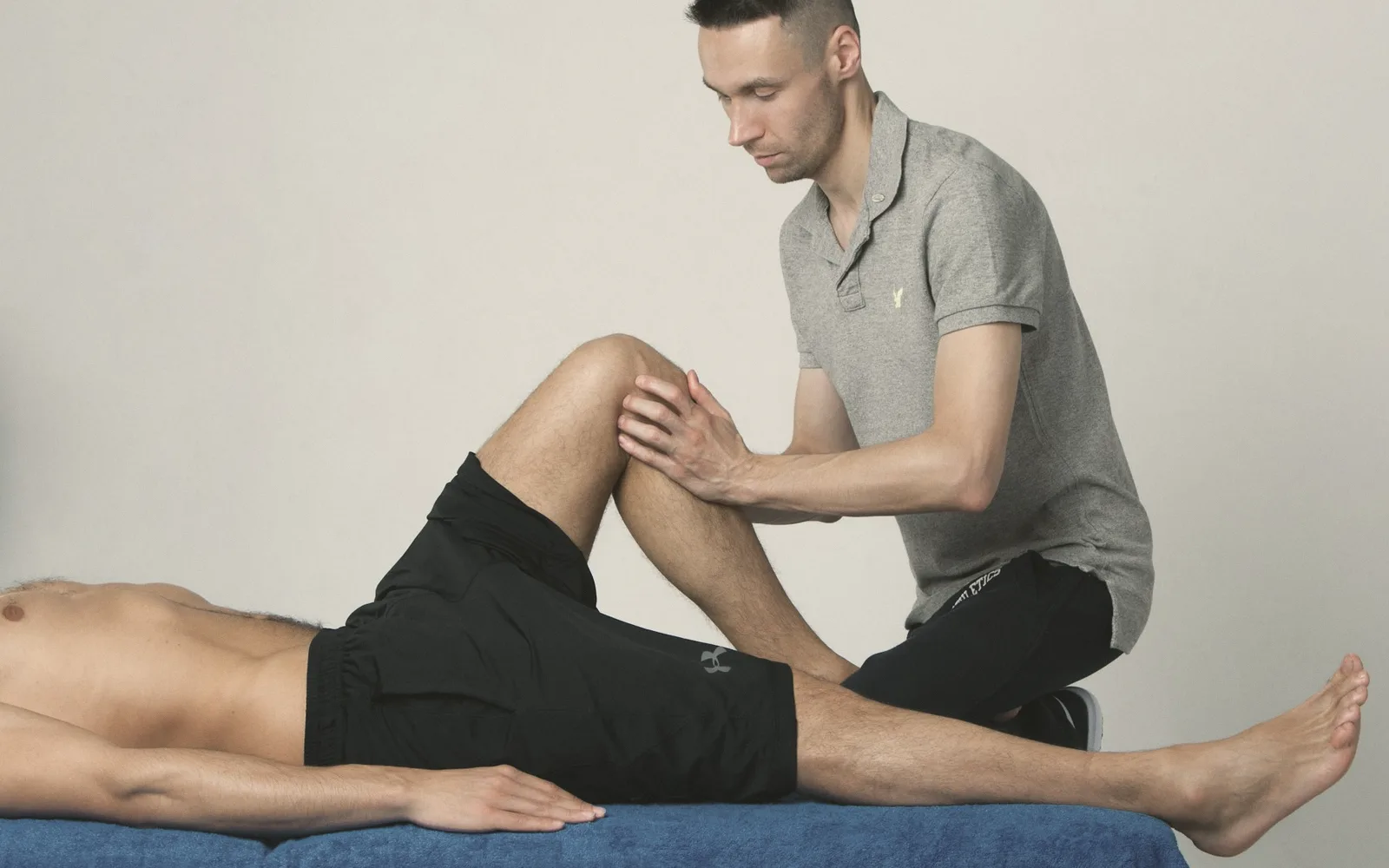
A physiatrist visit often starts with questions about your pain and goals, followed by a hands-on exam of the area and how you move. Expect to describe what hurts, when it started, what makes it better or worse, and what you've already tried.
History
Your history comes first: you describe your symptoms, past injuries, medicines and daily activities.
Exam
The exam checks strength, range of motion, nerves and the painful spot.
Testing, if needed
Testing, if needed, means imaging or nerve testing is ordered only when it would change the plan.
Plan
Your plan comes at the end: you leave with a plan, which may combine exercise, medicine, a procedure or a referral.
Our approach
A Physiatrist at Protocol Health
Protocol Health's Pain & Recovery program is built around a physiatrist, Dr. Richard Dentico, who is board-certified in physical medicine and rehabilitation. Pain & Recovery opens in Scarsdale in early 2027, and we are not booking evaluations yet. When it opens, care for knee and hip pain, back pain and sciatica and heel and foot pain will start with an exam. Leave your email and we will tell you when we open.
FAQ
Frequently Asked Questions
Is a physiatrist a real doctor?
Yes. A physiatrist is a medical doctor who completed medical school and a residency in physical medicine and rehabilitation, and who may be board certified in the specialty.
Do physiatrists do surgery?
Physiatry focuses on nonsurgical care. Physiatrists often work alongside surgeons when surgery is part of the picture.
Do physiatrists give injections?
Some physiatrists perform injections and other procedures as part of a treatment plan. Whether one makes sense depends on your diagnosis after an exam.
Do I need a referral to see a physiatrist?
It depends on your insurance plan and the practice. Some people book directly and others are referred by a primary care doctor or surgeon, so check with the practice and your plan.
What is the difference between a physiatrist and a pain management doctor?
Pain Medicine is one of the subspecialty certifications a physiatrist can earn. Pain specialists can also come from other backgrounds. A physiatrist looks at function and the whole picture, not only pain relief.
Explore
Related at Protocol Health
Get NotifiedMedical disclaimer
This article is for education only and is not medical advice, diagnosis, or treatment. Talk to a licensed clinician before starting, stopping, or changing any medication.
References
- American Academy of Physical Medicine and Rehabilitation. About Physical Medicine & Rehabilitation. https://www.aapmr.org/about-physiatry/about-physical-medicine-rehabilitation
- American Academy of Physical Medicine and Rehabilitation. FAQs About Physiatry. https://www.aapmr.org/about-physiatry/about-physical-medicine-rehabilitation/faqs-about-physiatry
- American Board of Physical Medicine and Rehabilitation (ABPMR). https://www.abpmr.org/
- MedlinePlus. Rehabilitation. https://medlineplus.gov/rehabilitation.html
- National Institute of Arthritis and Musculoskeletal and Skin Diseases (NIAMS). Back Pain. https://www.niams.nih.gov/health-topics/back-pain
Why trust our physicians
Every article is reviewed by a licensed physician on our medical team and is kept current by our editorial team. Read our editorial policy and our medical review process.
- Medically reviewed by
- Richard Dentico, MD
- Written by
- Protocol Health Editorial Team
- First published
- Last updated
See an error? Email care@protocolhealthmd.com and we will review it.